When people hear the word "brand," they often think logo. But your brand is far more than a graphic — it's the complete impression your business makes on every person who encounters it. It's the feeling someone gets when they see your website, read your emails, interact with your customer service team, or use your product.
A strong brand identity creates instant recognition, communicates your values without words, builds trust faster, and allows you to charge premium prices in competitive markets. For small business owners, investing in brand identity early is one of the highest-leverage activities you can undertake. This guide walks through the three core pillars of brand identity: visual identity, brand voice, and brand positioning.
Why Brand Identity Matters for Small Businesses
You might think brand identity is a luxury for large companies with big marketing budgets. The data tells a different story. According to research by Lucidpress, consistent brand presentation across all platforms increases revenue by an average of 23%. Small businesses that present professionally and consistently are perceived as more trustworthy, command higher prices, and generate more referrals.
More practically: your brand identity is working for you or against you whether you invest in it or not. An inconsistent or amateurish brand presence tells potential customers that your business isn't established, isn't professional, or isn't worth paying full price. Building a strong brand from day one changes that equation entirely.
Pillar 1: Your Logo
Your logo is the visual anchor of your entire brand identity. It appears on your website, business cards, email signatures, social profiles, packaging, and every marketing asset you create. Getting it right matters — but many new entrepreneurs make the mistake of either over-investing before they have a validated business concept or under-investing with a generic template that undermines their credibility.
What Makes a Good Logo
- Simplicity: The best logos in the world — Nike, Apple, FedEx — are deceptively simple. A simple logo is more memorable, more versatile, and easier to reproduce across different contexts.
- Memorability: Your logo should be distinctive enough that people can recall it after a brief encounter. If it looks like every other logo in your industry, it's failing.
- Versatility: A good logo works at any size (from a tiny favicon to a billboard), in color and black-and-white, on light and dark backgrounds.
- Relevance: The design should feel appropriate for your industry and target audience without being so literal that it limits you as you grow.
How to Get a Great Logo
For new businesses in early stages, there are three reasonable approaches:
- DIY with Canva or Looka: AI-powered tools like Looka can generate professional logo options for $20–$80. Suitable for very early-stage businesses before revenue justifies a larger investment.
- Hire a designer on Fiverr or 99designs: $100–$500 can get you a solid, custom logo from a professional designer. Brief them thoroughly with examples of what you like and clear direction on your brand values and target customer.
- Work with a branding agency: Full branding packages from professional agencies run $2,000–$10,000+. Appropriate once your business is generating consistent revenue and you're ready for a comprehensive brand refresh.
At Novus Pathway, our website and branding service includes professional brand identity work as part of your complete business launch package.
Pillar 2: Brand Colors
Color is one of the most powerful psychological tools in your branding arsenal. Research by the Institute for Color Research found that 90% of snap judgments about products are based on color alone. Your color choices communicate personality, values, and quality before a single word is read.
Color Psychology Basics
- Blue: Trust, reliability, professionalism. Used heavily by financial institutions, tech companies, and healthcare brands.
- Green: Growth, health, sustainability, wealth. Popular with finance, wellness, and eco-conscious brands.
- Orange: Energy, enthusiasm, creativity, warmth. Used by brands that want to feel approachable and dynamic.
- Black/Dark Navy: Luxury, sophistication, authority. Signals premium positioning and seriousness.
- Red: Urgency, passion, energy. Used sparingly for CTAs and alerts; dominates fast food and clearance sales.
- White/Light: Cleanliness, simplicity, space. Common in healthcare, tech, and minimalist brands.
Building Your Color Palette
Start with one primary brand color that represents your core brand personality. Then build a supporting palette of two to four colors that complement it. Include a neutral (white, light gray, or dark navy) and an accent color used for CTAs and highlights. Save your bright, attention-grabbing accent color for important calls to action — overusing it dilutes its power.
Once you have your palette, document the exact HEX, RGB, and CMYK values. Consistency requires precision — not "kind of blue" but #2563EB specifically.
Pillar 3: Brand Typography
Typography is the visual identity of your words. The fonts you choose communicate personality as powerfully as color. Serif fonts (Times New Roman, Georgia) feel traditional, trustworthy, and established. Sans-serif fonts (Inter, Helvetica, Futura) feel modern, clean, and professional. Script fonts feel personal and creative — but use them sparingly for display purposes only, never for body copy.
For most small businesses, a clear font pairing system works well: one distinctive display font for headlines and one clean, highly legible font for body copy and UI elements. Keep it simple — two fonts maximum in your core brand system.
Pillar 4: Brand Voice
If your brand were a person, how would it speak? Brand voice is the consistent personality and tone that comes through in all your written and verbal communication — your website copy, social media posts, email newsletters, customer service interactions, and marketing materials.
Defining Your Brand Voice
A useful exercise: choose four to six adjectives that describe your brand's personality. For example: "expert, approachable, direct, empowering, modern." Then translate each adjective into a specific communication behavior:
- Expert: We use precise, informed language. We cite data and specific results. We don't hedge unnecessarily.
- Approachable: We write in conversational language. We use "you" and "we." We avoid jargon and corporate-speak.
- Direct: We get to the point quickly. We lead with the most important information. We make clear CTAs.
Document these voice guidelines and share them with anyone who creates content for your business — whether that's a copywriter, social media manager, or AI tool.
Putting It All Together: Brand Consistency
The power of brand identity isn't in any single element — it's in the consistent, cohesive application of all elements together. Every touchpoint should feel like it comes from the same brand: your website, your social profiles, your proposals, your invoices, your email signature.
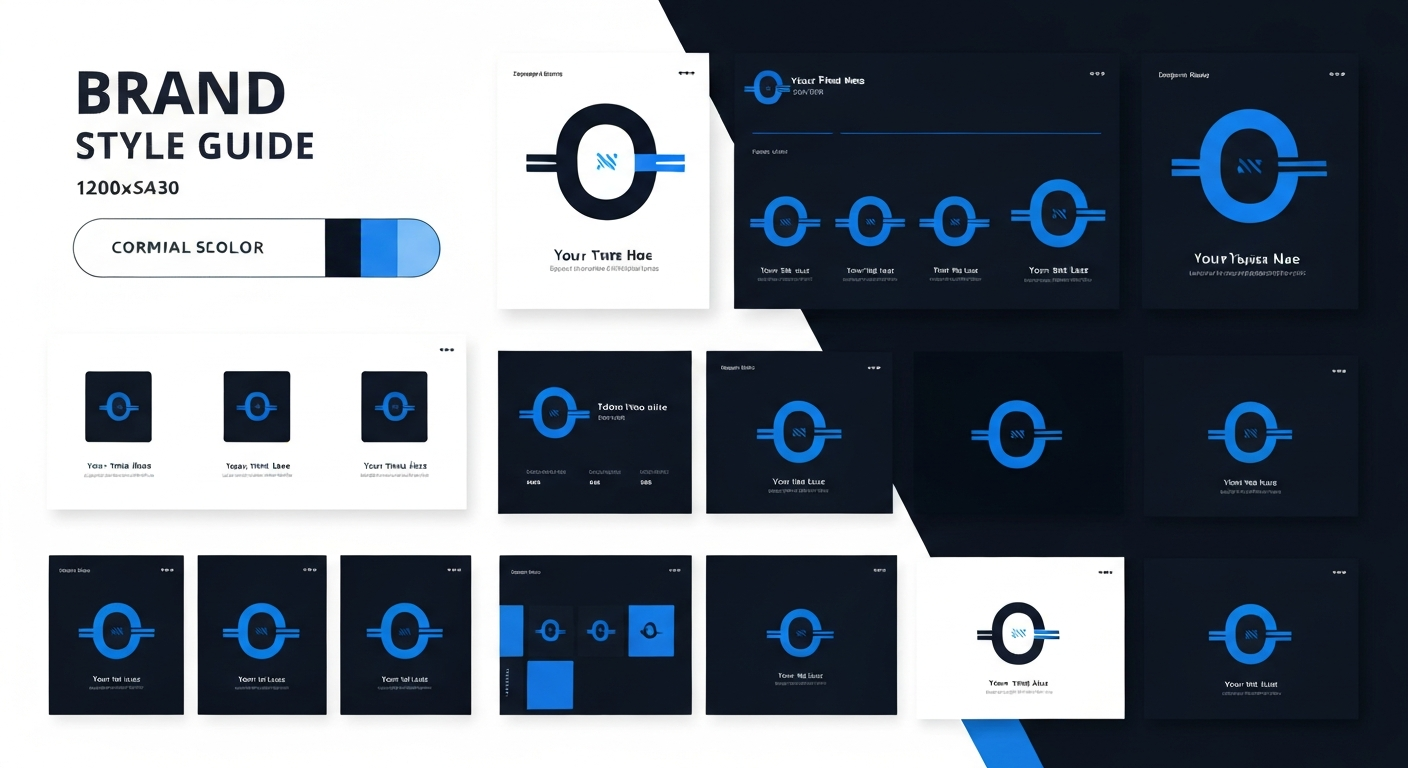
Create a simple one-page brand guide that documents your logo usage rules, color palette values, typography choices, and voice guidelines. Share it with any collaborators, freelancers, or team members who create content on your behalf. This single document will save hours of inconsistency and protect your brand's integrity as you scale.
When you're ready to launch your complete business presence — brand identity, professional website, and all the systems that make it work — our Novus Pathway packages deliver everything together, in seven days.
Infrastructure Deployment
Ready to Deploy Your AI Infrastructure?
Build a scalable business operating system designed for modern growth.