Content marketing is the most overlooked lead generation strategy for service businesses — and it's also one of the most powerful. While your competitors are competing for the same paid advertising real estate and watching their customer acquisition costs climb, content-driven businesses are building an audience, establishing authority, and generating inbound leads at essentially zero marginal cost.
The catch? Content marketing takes time to gain momentum. But for service businesses willing to invest in the strategy consistently, the long-term payoff in qualified, inbound leads is unmatched by any other marketing channel. This guide shows you how to get started effectively even on a minimal budget.
Why Content Marketing Works for Service Businesses
Service businesses have a structural advantage in content marketing that product companies lack: your expertise is your product. The knowledge you have about your field — the insights, frameworks, processes, and lessons from client work — is genuinely valuable to the people you serve.
When you share that expertise freely in content form, several powerful things happen:
- You attract qualified prospects who are already interested in your subject matter before they ever contact you
- You establish authority and credibility that makes prospects significantly more likely to trust you and your pricing
- You create SEO-driven organic traffic that generates leads without ongoing advertising spend
- You filter for ideal clients — people who find your specific expertise valuable are people well-suited to become your clients
- You build a long-term content library that compounds in value over time
Step 1: Define Your Content Niche
The most common content marketing mistake is being too broad. "Business advice" is a topic. "How to set up automated lead follow-up for consulting businesses" is content marketing. Specificity is what makes your content valuable to your ideal client and what helps Google understand who to show it to.
Define your content niche at the intersection of: what you know deeply (your expertise), what your ideal clients want to learn (their questions and pain points), and what Google hasn't already covered exhaustively (competitive gaps). The more precisely you can define this overlap, the more effectively your content will attract the right audience.
Step 2: Build Your Content Foundation (Blog)
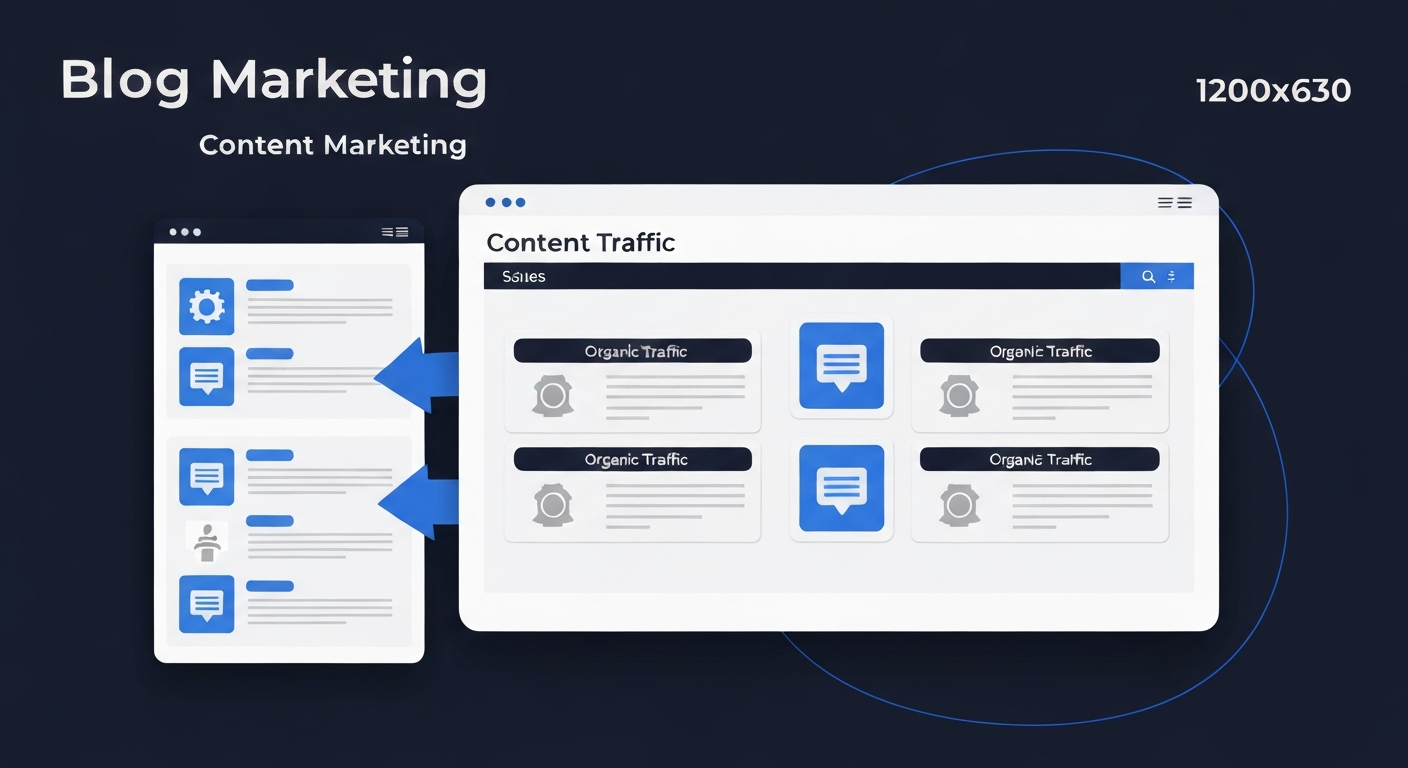
For most service businesses, a blog on your company website is the cornerstone of your content marketing strategy. Blog posts create indexable pages that can rank in search results, drive traffic over time, and serve as the source content that you repurpose across other channels.
Start with 10–15 cornerstone articles that comprehensively address the most important questions your ideal clients have. These should be your most thorough, best-quality pieces — articles that are genuinely the best resource available on their specific topic. Quality over quantity in the early stages: one excellent article outperforms five mediocre ones in every dimension that matters.
A professional website with a properly configured blog is essential for getting search traffic from your content. Technical SEO factors — page speed, proper metadata, structured data — directly affect how Google ranks your articles.
Step 3: Choose Your Secondary Channels
Not all content marketing happens through blogging. Depending on your ideal client's media consumption habits and your own strengths, secondary channels may be more effective:
- LinkedIn articles and posts: Ideal for B2B service businesses. High-quality text content performs particularly well. Shorter "thought of the day" posts can drive significant engagement and visibility.
- YouTube videos: The second-largest search engine in the world. Tutorial and educational videos that teach what you know can generate consistent views and leads for years. High retention threshold — only commit if you can produce quality consistently.
- Podcast: Excellent for building deep relationship with an audience. Lower discovery potential than search-driven content, but very high conversion rates because listeners form genuine connections with hosts.
- Short-form video (Instagram Reels, TikTok): Highest discovery potential of any channel currently. Best for businesses with visual or personality-driven services. Requires consistent production but can build audiences very quickly.
Start with one secondary channel and do it well before adding more. Consistent execution on one platform beats mediocre presence on five.
Step 4: Content Repurposing — One Piece of Content, Many Platforms
The most efficient content marketing strategy for resource-constrained businesses is systematic repurposing: create one cornerstone piece of content and transform it into multiple formats for different platforms. This multiplies your content output without proportionally increasing your creation effort.
A single long-form blog post can become: a LinkedIn article (lightly adapted), five social media posts (one key insight per post), an email newsletter (adapted for your list), a short YouTube video (talking through the key points), a podcast episode (conversation about the topic), and a lead magnet (compiled into a guide).
AI tools significantly accelerate the repurposing process. AI can take your original blog post and generate appropriate versions for each channel in minutes — dramatically reducing the time investment required to maintain multi-channel content presence.
Step 5: Convert Content Consumers Into Email Subscribers
Content that doesn't capture leads is entertainment. The goal of your content marketing is not just to build an audience of readers and viewers — it's to convert a percentage of that audience into email subscribers who can then be nurtured toward becoming clients.
Every piece of content should have a clear next step for interested readers: download a related lead magnet, join your email list, or visit a specific service page. Your most popular content pieces deserve dedicated lead magnets that serve the specific audience consuming that content.
Step 6: Measure What Matters
Content marketing ROI is often misunderstood because the timeline is longer than paid advertising. Track these metrics to understand what's working:
- Organic search traffic (Google Search Console)
- Email subscribers acquired from content
- Content-attributed leads in your CRM pipeline
- Content-attributed revenue (which clients mention your content as part of their decision?)
A properly configured CRM with lead source tracking lets you see exactly which content pieces are driving actual business revenue, not just traffic. This data tells you where to invest more content effort.
The Bottom Line
Content marketing doesn't require a big budget — it requires expertise, consistency, and the right distribution infrastructure. If you have genuine knowledge that helps your ideal clients, you have everything you need to build a content marketing engine. Start with one channel, produce one cornerstone piece per week, and repurpose systematically. The compounding returns over 12–24 months consistently outperform any other organic marketing strategy. See our launch packages for how we build your content-ready website and CRM from day one.
Infrastructure Deployment
Ready to Deploy Your AI Infrastructure?
Build a scalable business operating system designed for modern growth.