Here's a stat that should change how you think about your follow-up process: 80% of sales require at least five follow-up contacts after the initial interaction. Yet 44% of salespeople give up after just one follow-up, and 92% give up before the fifth. This gap — between the follow-up cadence required to close deals and the follow-up effort most businesses actually apply — is one of the biggest profit leaks in small business.
The solution isn't to work harder or be more disciplined about manual follow-ups. The solution is automation. This step-by-step guide shows you how to build an automated lead follow-up system that works 24/7, reaches every prospect at the right time, and converts more of your existing leads into paying clients without adding to your workload.
Why Manual Follow-Up Fails
Manual follow-up fails for the same reason every other manual process fails at scale: it's dependent on human memory, discipline, and available time. When business gets busy — which is exactly when you need your follow-up working hardest — manual processes break down first. Leads go cold because you forgot. Deals are lost because you were overwhelmed with existing clients. Revenue is left on the table because you ran out of hours in the day.
Automation removes human variability from the equation. Every lead gets followed up with, on schedule, with a personalized message, regardless of how busy you are. The system works even when you're sleeping, traveling, or onboarding a new client.
Step 1: Map Your Lead Stages
Before you build any automation, you need to clearly define the stages a lead moves through from initial contact to becoming a customer. Most service businesses have stages that look something like this:
- New Lead: Just entered your pipeline. May have filled out a form, messaged on social, or been referred.
- Contacted: You've reached out but haven't had a substantive conversation.
- Engaged: You've had a conversation. They've expressed interest. A proposal or next step is pending.
- Proposal Sent: You've sent pricing, scope, or a formal proposal.
- Negotiating: Active back-and-forth. Deal is close.
- Won/Lost: Deal closed or fell through.
Define these stages for your specific business. The automation you build will trigger different follow-up sequences at each stage.
Step 2: Set Up Your CRM
Automated follow-up requires a CRM as its foundation. Your CRM is where leads are stored, stages are tracked, and automation is triggered. Without a CRM, you have no way to systematically manage and automate follow-up at scale.
Your CRM needs to capture leads from all your sources: website forms, social media, referrals, and advertising. Every lead capture point should automatically create a new contact record in your CRM and trigger the appropriate automation sequence. Our CRM and automation setup configures all of this as part of your launch package.
Step 3: Write Your Follow-Up Sequence
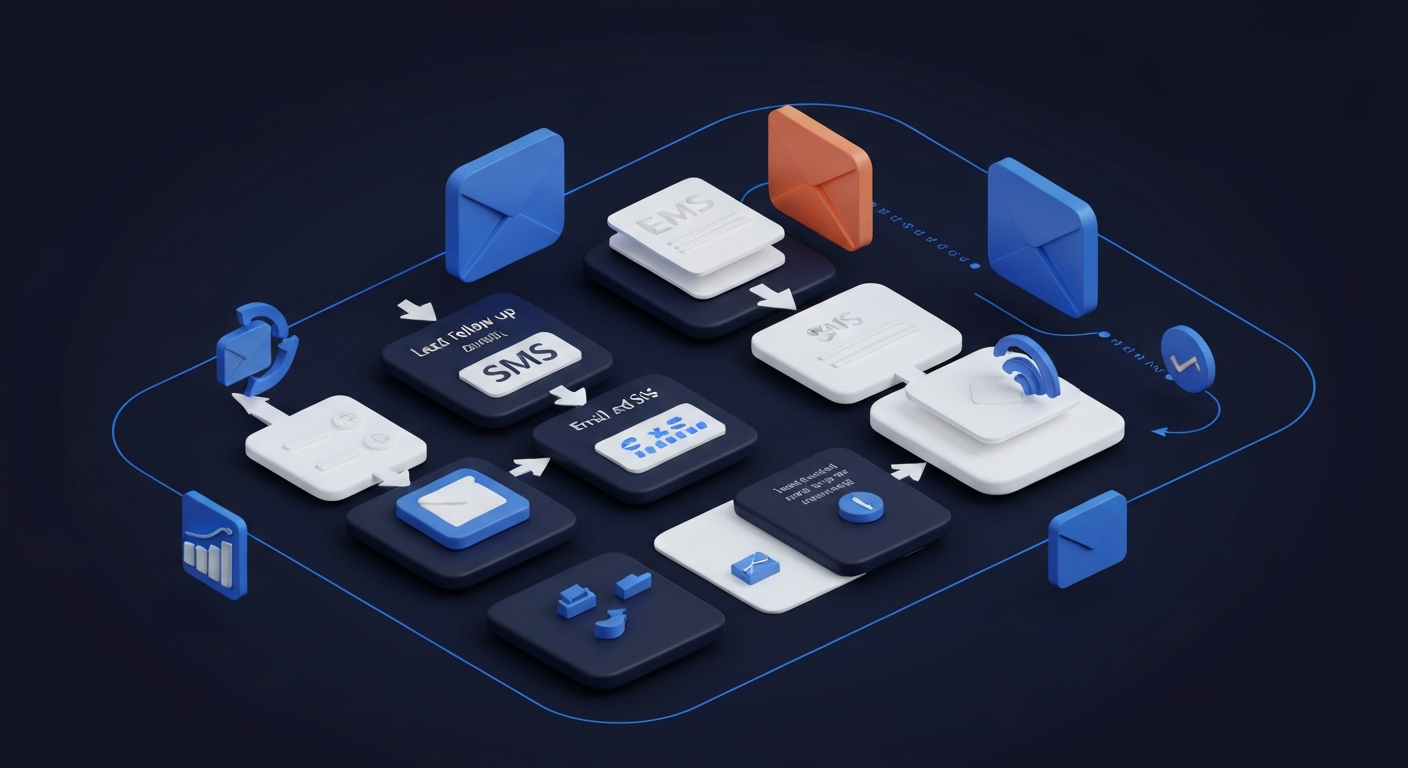
An automated follow-up sequence is a series of messages (emails, SMS texts, or both) sent at predetermined intervals after a specific trigger. Here's what an effective initial follow-up sequence looks like for a service business:
- Immediately (Day 0): Instant confirmation message. "Thanks for reaching out! Here's what to expect next..." This sets expectations and confirms you received their inquiry.
- Day 1: Value-providing email. Share a relevant resource, answer a common question, or explain your process. This demonstrates expertise before the sales conversation happens.
- Day 3: Soft follow-up. A brief, direct check-in: "Wanted to make sure you got my earlier message — do you have questions I can answer?"
- Day 7: Social proof email. Share a client success story or testimonial that's relevant to their situation.
- Day 14: The last attempt. "I don't want to keep sending messages if the timing isn't right. Is this still something you'd like to explore?"
Writing Effective Follow-Up Messages
The best automated follow-up messages have these characteristics:
- Short: 3–5 sentences is ideal for email follow-ups. Respect people's time.
- Personal: Use first names. Reference their specific situation where possible with merge tags.
- One clear ask: Don't give people multiple options or questions. One clear next step per message.
- Non-pushy: You're checking in, not pressuring. The tone should be genuinely helpful, not desperate.
Step 4: Build Your Post-Proposal Sequence
The time after sending a proposal is when most deals are lost — not because prospects said no, but because they got busy and forgot. A dedicated post-proposal automation sequence dramatically improves close rates:
- Day 1 after proposal: "Just sent over the proposal — let me know if you have any questions!"
- Day 3: Address common objections: "One question I often hear at this stage is [X] — here's how I typically handle that..."
- Day 7: Create urgency with a soft deadline or upcoming schedule constraint.
- Day 14: Final decision check-in with an easy out option.
Step 5: Build Your Client Nurture Sequence
Follow-up automation isn't only for unconverted leads. Existing clients benefit enormously from automated nurture sequences that maintain the relationship, share relevant resources, request reviews, and open doors for referrals and upsells.
A simple client nurture sequence might include: a 30-day check-in after project completion, a 90-day resource or tip relevant to their business, a review request at the 60-day mark when satisfaction is typically highest, and an annual renewal reminder with an upgrade offer.
Step 6: Test, Measure, and Optimize
Once your sequences are running, the work isn't done — it's just beginning. Monitor open rates, reply rates, and conversion rates for each message in your sequences. Test different subject lines, send times, and message lengths. The sequences that work best for your specific audience and business type will emerge from the data.
The Bottom Line
Automated lead follow-up is one of the highest-ROI systems you can build in your business. It works 24/7, never forgets, never gets overwhelmed, and systematically converts leads that manual follow-up would lose. The businesses that implement it consistently see significantly higher conversion rates without increasing their workload.
Our Growth and AI Pro packages include complete automated follow-up setup — all the sequences, CRM configuration, and integrations you need — deployed in 7 days.
Infrastructure Deployment
Ready to Deploy Your AI Infrastructure?
Build a scalable business operating system designed for modern growth.