Time is the scarcest resource in any small business. You're wearing multiple hats, making decisions across every function of your business, serving clients, and trying to grow — all at the same time. The hard math of a 40-hour workweek simply doesn't accommodate everything that demands your attention.
This is exactly why AI automation has become the most transformative technology available to small business owners in 2025. Not because it's exciting or cutting-edge, but because it literally gives time back. The entrepreneurs and small business owners who have implemented comprehensive AI automation consistently report saving 20 or more hours per week — time they redirect toward higher-value activities, client service, or simply reclaiming their lives outside the business.
This guide breaks down exactly how those savings happen, which tasks are most worth automating, and how to get started.
The Time Audit: Where Small Business Owners Actually Spend Their Time
Before you can understand the impact of automation, you need an honest picture of how time is currently being spent. Research on small business owner time allocation consistently finds that the majority of time goes to tasks that fall into two categories: administrative and repetitive operational work.
Common time sinks include: responding to routine inquiries and frequently asked questions (3–5 hours/week), manually following up with leads and clients (3–4 hours/week), scheduling and rescheduling appointments (2–3 hours/week), social media posting and management (2–4 hours/week), creating and sending invoices and payment reminders (1–2 hours/week), manually updating CRM and pipeline records (2–3 hours/week), and preparing routine reports and summaries (1–2 hours/week).
Total: 14–23 hours per week on tasks that AI automation can handle entirely or substantially reduce. That's essentially a part-time job's worth of work that can be eliminated from your plate.
The 7 Highest-Impact AI Automations for Small Businesses
1. AI-Powered Customer Service and FAQ Response
The single highest-volume administrative task for most service businesses is responding to routine inquiries — questions about pricing, availability, process, what's included, how to get started. An AI chatbot trained on your business information can handle these questions instantly, 24/7, with consistent quality.
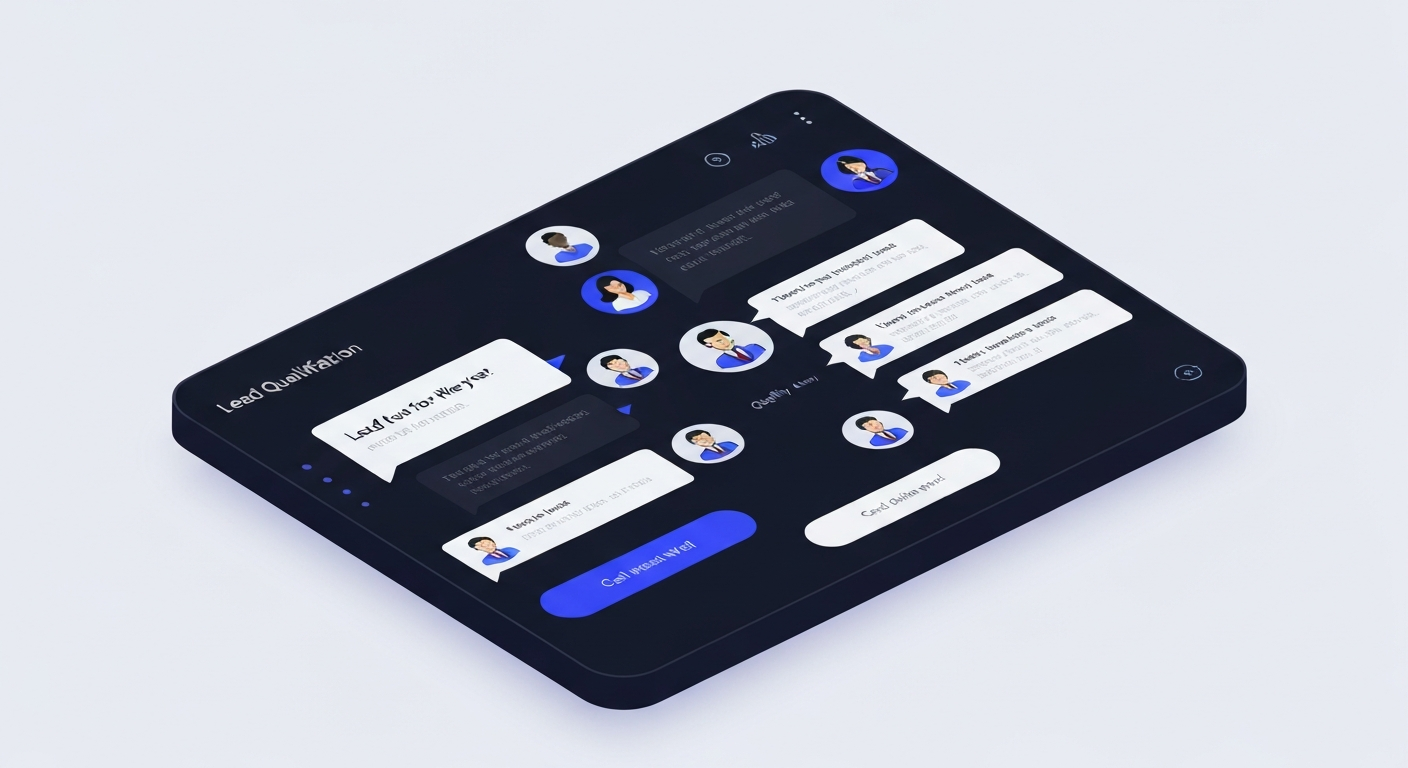
Modern AI chatbots do more than recite FAQ answers. They can qualify leads by asking the right questions, capture contact information, book appointments, and seamlessly hand off to a human when the conversation requires it. For businesses that receive 20–50 inquiries per week, this alone can save 5–8 hours while dramatically improving the lead response experience.
2. Automated Lead Follow-Up Sequences
As we covered in our guide on automated lead follow-up, manually following up with every prospect is one of the most time-consuming activities in any sales process. AI-powered CRM systems can analyze lead behavior, automatically trigger personalized follow-up messages at optimal intervals, and adapt the sequence based on how each prospect is engaging.
This isn't just about saving time — it's about dramatically improving the quality and consistency of your follow-up. An AI system never forgets to follow up, never gets discouraged after a non-response, and can manage hundreds of simultaneous follow-up sequences without any human oversight.
3. Content Creation and Social Media
AI content tools have transformed content creation for small businesses. What previously required hours of writing, editing, and formatting can now be completed in minutes. AI tools can generate first drafts of blog posts, email newsletters, and social media captions; repurpose long-form content into multiple shorter formats; create subject line variations for split testing; and maintain consistent posting schedules across multiple platforms automatically.
This doesn't mean eliminating human judgment from your content — the best results come from using AI to handle the drafting and volume work while you apply your expertise and brand voice in the editing process. The net result is significantly more content, produced in a fraction of the time.
4. Invoice Generation and Payment Follow-Up
Invoicing and accounts receivable management is pure administrative work that can be almost entirely automated. Modern billing platforms integrate with your CRM and project management tools to automatically generate invoices based on project milestones or recurring schedules, send payment reminders at defined intervals, and update your financial records when payment is received. Late payment follow-up sequences eliminate the awkward manual "just checking in on that invoice" email.
5. Appointment Scheduling and Reminders
As detailed in our guide on appointment booking automation, the scheduling process is one of the highest-impact areas for automation. Combined with AI that can answer scheduling questions, handle rescheduling requests, and manage waitlists, your calendar management can become essentially autonomous.
6. CRM Data Entry and Pipeline Updates
Keeping your CRM updated is critical for visibility and follow-up, but manual data entry is tedious and time-consuming. Modern AI integrations can automatically capture lead information from emails and forms, update deal stages based on activity, log call notes and meeting summaries, and create follow-up tasks — keeping your pipeline accurate without any manual updating.
7. Reporting and Business Intelligence
AI-powered reporting tools can automatically generate weekly revenue summaries, lead conversion reports, pipeline health reviews, and marketing performance analyses. Instead of spending hours manually pulling and formatting data, you receive clear, actionable insights delivered to your inbox on the schedule you define.
Getting Started: The Right Automation Approach
The mistake many small business owners make when approaching automation is trying to automate everything at once. This leads to complex, fragile systems that require constant maintenance and never quite work as hoped.
Start with the highest-impact, most straightforward automation: lead follow-up. Implement an automated follow-up sequence for new leads and measure the results for 30 days. Then add appointment reminders. Then chatbot for common inquiries. Layer in additional automation as each previous implementation stabilizes and produces reliable results.
The fastest and most reliable approach is working with a team that has built these systems many times before. Our Growth and AI Pro packages include complete AI automation setup — chatbots, follow-up sequences, CRM integration, and more — all deployed and tested in 7 days.
Infrastructure Deployment
Ready to Deploy Your AI Infrastructure?
Build a scalable business operating system designed for modern growth.